
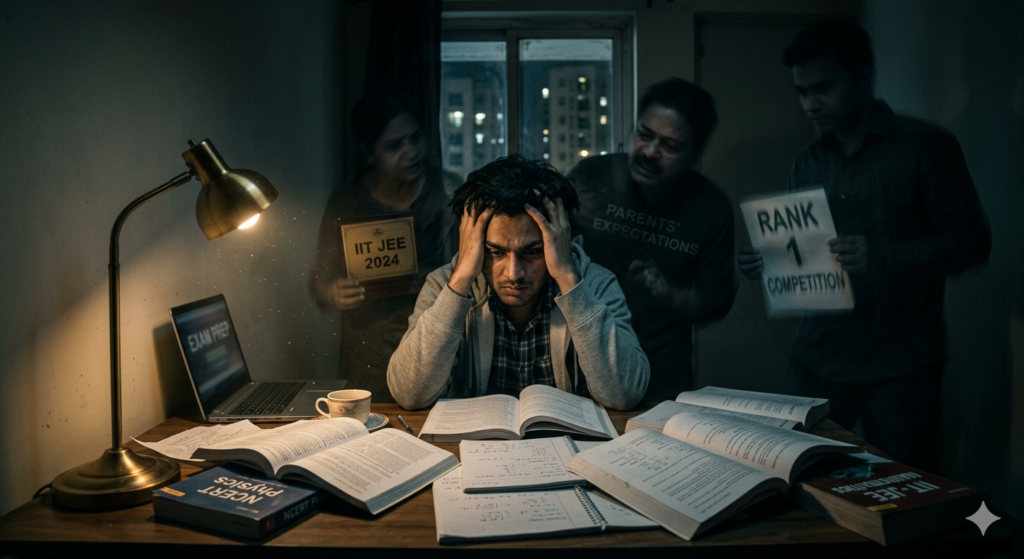
“Doctor, I just need to study harder… I don’t know why I’m breaking down.”And every time, I pause—because this isn’t about laziness. This is about pressure turning into pain. In India, exams like NEET and UPSC are not just tests. They become identity, expectation, and sometimes… survival. But when ambition crosses a certain line, it can quietly turn into something more serious—like Generalized Anxiety Disorder or even depression.
🎯 The Dream That Starts It All
Let’s take an example. Riya, 19, moved to Kota with one goal: crack NEET. At first, she was motivated:- 10–12 hours of study
- Coaching classes
- Strict routine
- Sleep reduced
- Anxiety increased
- Self-doubt became constant
“Even when I’m studying, my heart keeps racing… like I’m already failing.”This is where ambition starts shifting into anxiety.
🧠 What Happens in the Mind?
Exam stress isn’t just “pressure.” It’s biological. When you constantly think:- “What if I fail?”
- “My parents are depending on me.”
- “Everyone else is doing better.”
- Increased cortisol (stress hormone)
- Racing thoughts
- Poor concentration
- Sleep disturbances
- Anxiety disorders
- Burnout
- Panic attacks
⚠️ Signs That Exam Stress Is Becoming a Disorder
Not all stress is bad—but here’s when to worry:1. Constant Anxiety (Even Without Studying)
You feel restless even during breaks.2. Physical Symptoms
- Palpitations
- Sweating
- Headaches
- Stomach discomfort
3. Sleep Problems
You either:- Can’t sleep
- Or wake up feeling tired
4. Fear of Failure Becomes Overwhelming
It’s no longer motivation—it’s paralysis.5. Burnout
You feel:- Emotionally numb
- Disconnected
- Unable to study despite trying
💬 What Students Often Say
These are real patterns I hear:“I sit with books for hours, but nothing goes in.” “Everyone else seems ahead of me.” “If I don’t clear this exam, my life is over.”Let’s pause there. 👉 No exam defines your entire life. But your mind, under pressure, starts believing that it does.
🧩 Why Indian Students Are More Vulnerable
In India, exams carry emotional weight:- Family expectations
- Social comparison
- Limited “acceptable” career paths
- Coaching culture (constant competition)
🛠️ How to Manage NEET/UPSC Stress (Practical, Realistic Tips)
Let’s keep this practical—not motivational clichés.✔️ 1. Study Smart, Not Just Long
Quality > Quantity Break sessions into focused intervals (50–60 mins)✔️ 2. Normalize Breaks
Breaks are not “wasting time”—they reset your brain.✔️ 3. Limit Comparison
Your journey ≠ someone else’s rank.✔️ 4. Sleep Is Non-Negotiable
6–8 hours of sleep improves memory and reduces anxiety.✔️ 5. Talk It Out
Bottled stress becomes anxiety. Speak to:- Friends
- Family
- Or a mental health professional
✔️ 6. Seek Help Early
If symptoms persist, don’t wait. Early support can prevent full-blown disorders.🏥 How We Help at Mindwise Clinic, Lucknow
At Mindwise Clinic, we work closely with students preparing for competitive exams.👩⚕️ Under the guidance of:
Dr. Parul Prasad (MBBS, MD, DNB, FGMH, MIPS) We provide:- Stress and anxiety assessment
- Performance anxiety management
- Therapy (CBT, coping strategies)
- Medication when required
- Burnout recovery plans
🌱 A Message Every Student Needs to Hear
You are more than your rank. You are more than a result. And taking care of your mental health is not a distraction from success— it’s the foundation of it.❓ FAQs
1. Is exam stress normal?
Yes—but when it becomes constant and overwhelming, it needs attention.2. Can anxiety affect performance?
Absolutely. It reduces concentration, memory, and confidence.3. Should I take medication?
Only if required—after proper evaluation by a psychiatrist.4. Can I recover and still perform well?
Yes. In fact, students perform better once anxiety is managed.📍 Contact Mindwise Clinic
🌐 Website: www.drparulprasad.com 📞 Phone: 095197 63693 📍 Location: Lucknow📢 Call to Action
If you’re preparing for NEET or UPSC and feel overwhelmed, don’t ignore it. 👉 Getting help is not weakness—it’s strategy. Reach out today and take control of both your preparation and your mental health.🧾 Disclaimer
This blog is for educational purposes only and does not replace professional medical advice. Please consult a qualified psychiatrist for proper diagnosis and treatment. – Mindwise Clinic | Dr. Parul Prasad, MD PsychiatryA note on this article: This content is for general educational purposes and is not a substitute for professional medical advice, diagnosis, or treatment. If you are experiencing a mental health crisis or need urgent help, please contact a local emergency service or a crisis helpline directly — such as India's KIRAN mental health helpline: 1800-599-0019 (toll-free, 24/7).
