
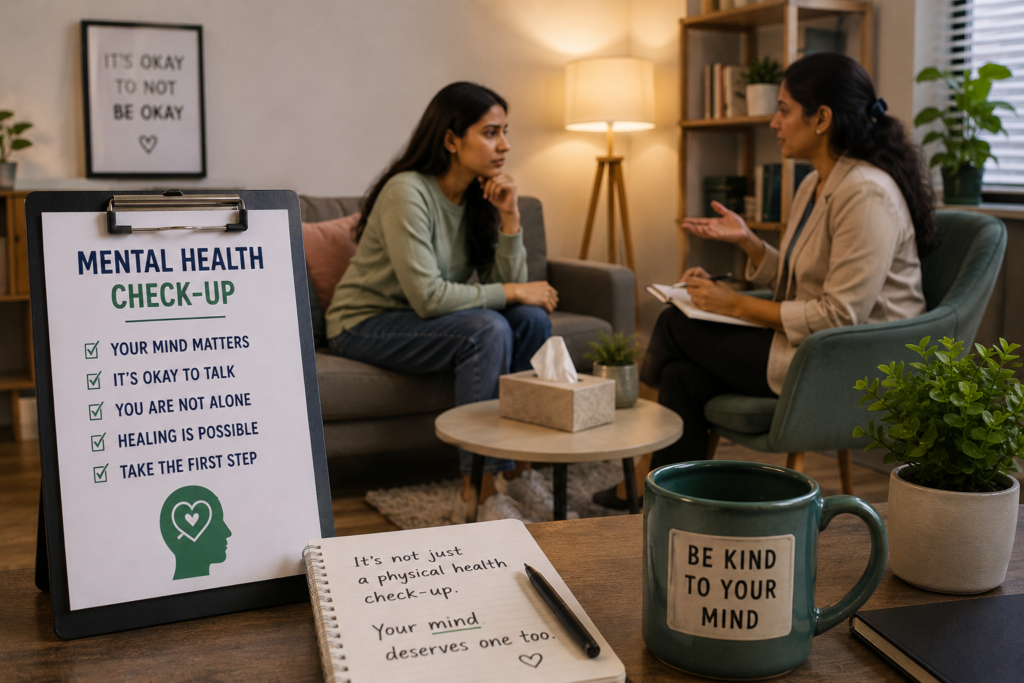
We Visit Doctors for Fever… So Why Not for Emotional Pain?
If someone has:- chest pain
- high blood pressure
- diabetes
- migraines
- stomach problems
“You should see a doctor.”But when someone experiences:
- anxiety
- emotional exhaustion
- panic attacks
- burnout
- overthinking
- hopelessness
- sleep problems
- emotional numbness
“Just stay positive.” “It’s all in your mind.” “Don’t think too much.” “Be strong.”And this is one of the biggest reasons why millions of people silently struggle with mental health issues for years without seeking help. In 2026, it is becoming increasingly clear: Mental health checkups should become as normal as physical health checkups. Because the brain is also part of the body.
We Normalize Physical Pain — But Ignore Emotional Pain
Most people do preventive health checkups for:- blood sugar
- blood pressure
- heart health
- thyroid problems
- vitamin deficiencies
- “How is my emotional health?”
- “Am I mentally burned out?”
- “Why am I constantly anxious?”
- “Why do I feel emotionally disconnected?”
- “Why am I unable to enjoy life anymore?”
- irritability
- fatigue
- sleep problems
- overthinking
- social withdrawal
- headaches
- emotional numbness
- lack of concentration
Preventive Mental Healthcare Matters
Just like physical illnesses become easier to manage when detected early, mental health conditions also respond better with early support. Regular mental health checkups can help identify:- anxiety disorders
- depression
- burnout
- trauma-related stress
- sleep disorders
- substance use problems
- emotional exhaustion
- work stress
- relationship distress
“But I Am Functioning Normally…”
One of the biggest myths is:“If I am still working or studying, I must be fine.”But many people continue functioning externally while silently struggling internally. Some people:
- go to office daily
- attend college
- care for families
- socialize normally
- panic attacks
- emotional emptiness
- severe anxiety
- hopelessness
- burnout
- suicidal thoughts
Why People Avoid Mental Health Checkups
1. Fear of Stigma
Many people still fear being labeled:- weak
- unstable
- “crazy”
- attention-seeking
2. Emotional Denial
People often minimize symptoms:- “I’m just stressed.”
- “Everyone feels this way.”
- “It will pass.”
- “I just need sleep.”
3. Cultural Conditioning
In many Indian families, emotional struggles are often normalized as:- overthinking
- weakness
- lack of willpower
- laziness
Mental Health Problems Can Affect Physical Health Too
Chronic emotional stress affects the entire body. Long-term anxiety and depression may contribute to:- headaches
- body pain
- stomach problems
- fatigue
- sleep disturbances
- blood pressure issues
- lowered immunity
- heart health problems
Emotional Wellness Is Not Luxury
Mental wellbeing is not something only “seriously ill” people need. Emotional wellness matters for everyone:- students
- professionals
- parents
- homemakers
- elderly individuals
- healthcare workers
- entrepreneurs
What Happens During a Mental Health Checkup?
Many people avoid psychiatry because they imagine judgment or interrogation. But a mental health consultation often simply involves:- understanding emotional struggles
- discussing stress
- sleep assessment
- emotional functioning
- concentration issues
- lifestyle patterns
- coping mechanisms
- psychological symptoms
When Should Someone Consider a Mental Health Checkup?
It may help if someone experiences:- persistent anxiety
- emotional exhaustion
- burnout
- sleep problems
- hopelessness
- panic attacks
- loss of motivation
- overthinking
- irritability
- inability to function normally
- social withdrawal
- emotional numbness
Why Young Adults Are Becoming More Aware
In 2026, younger generations are becoming more open about:- therapy
- burnout
- emotional health
- ADHD
- anxiety
- depression
- trauma
Seeking help early is strength, not weakness.
Families Need Awareness Too
Families often notice behavioral changes before the individual does. Instead of saying:- “You are overreacting.”
- “Be stronger.”
- “Stop thinking so much.”
- “You seem stressed lately.”
- “Would you like to talk?”
- “Maybe professional support could help.”
Final Thoughts
We do not wait for a heart attack before caring about heart health. So why wait for emotional breakdown before caring about mental health? Mental health checkups are not only for severe psychiatric illness. They are part of overall wellbeing. The mind also deserves attention, care, rest, and treatment when needed. And perhaps one of the healthiest changes society can make is this: Normalizing emotional care before suffering becomes unbearable. Because mental health is not separate from health. It IS health. 🌿A note on this article: This content is for general educational purposes and is not a substitute for professional medical advice, diagnosis, or treatment. If you are experiencing a mental health crisis or need urgent help, please contact a local emergency service or a crisis helpline directly — such as India's KIRAN mental health helpline: 1800-599-0019 (toll-free, 24/7).
