
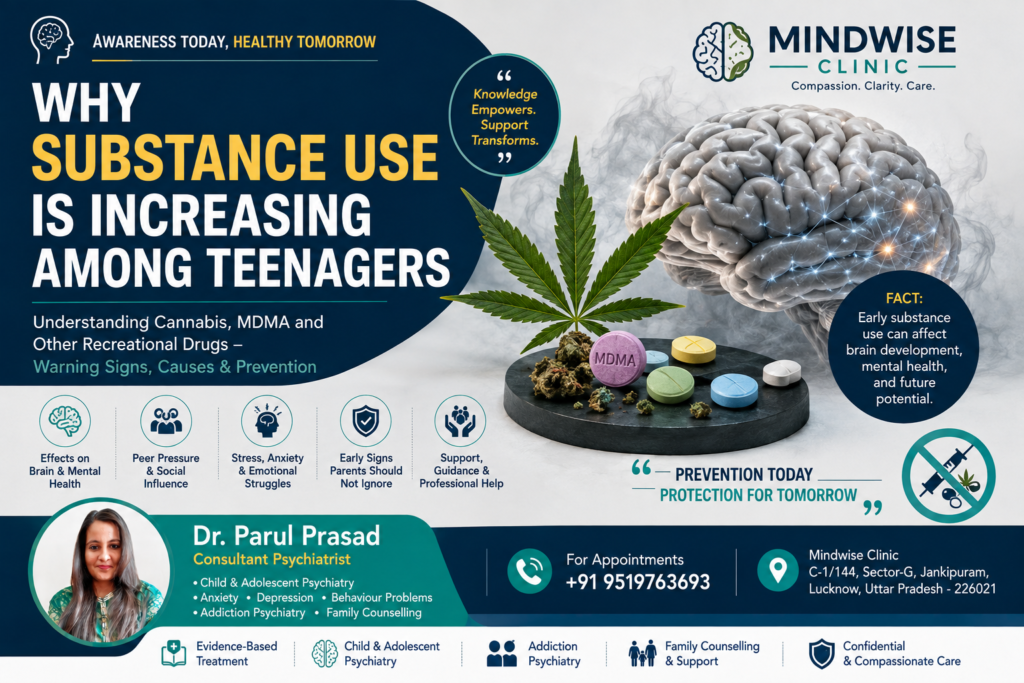
“Our child was doing well a year ago. Now they are secretive, irritable, and spending time with a different group of friends. Could drugs be involved?”The answer is sometimes yes—but understanding why teenagers begin experimenting is the first step toward helping them.
What Are Cannabis and MDMA?
Cannabis
Cannabis is derived from the Cannabis sativa plant and contains psychoactive compounds, primarily THC (tetrahydrocannabinol), which affects brain function. It is commonly smoked, vaped, or consumed in edible forms. Street names include:- Weed
- Marijuana
- Pot
- Ganja
- Hash
- Joint
MDMA (Ecstasy or Molly)
MDMA is a synthetic psychoactive drug that increases the release of serotonin, dopamine, and norepinephrine. It is often taken as tablets, capsules, or powder and is frequently associated with parties, music festivals, and nightlife. Teenagers often believe MDMA makes them feel:- More energetic
- More confident
- Emotionally connected
- Less anxious
Why Is Substance Use Increasing Among Teenagers?
1. Peer Pressure and the Need to Belong
Adolescence is a stage where peer approval often becomes more important than parental approval. Many teenagers fear rejection if they refuse drugs offered by friends. Common statements include:- “Everyone is trying it.”
- “Just once won’t hurt.”
- “Don’t be boring.”
2. Social Media Normalisation
Platforms such as Instagram, Snapchat, and short-video apps often portray substance use as fashionable or harmless. Images of celebrities, influencers, or peers using cannabis or attending parties where drugs are present can create a false impression that “everyone is doing it.” This repeated exposure reduces the perceived risk and increases curiosity.3. Curiosity and Sensation-Seeking
The teenage brain is naturally wired to seek novelty and excitement. Adolescents are more likely than adults to take risks because the brain regions responsible for impulse control and long-term planning are still developing. This makes experimentation with substances more likely, especially when supervision is limited.4. Academic and Social Stress
Many teenagers experience:- Pressure to achieve high grades
- Competitive examinations
- Relationship problems
- Bullying
- Family conflict
- Fear of failure
5. Mental Health Problems
Substance use may be a sign of an underlying mental health condition rather than the primary problem. Teenagers with the following conditions are at higher risk:- Anxiety disorders
- Depression
- ADHD
- Trauma-related disorders
- Low self-esteem
- Social anxiety
6. Easy Availability
Illegal substances are increasingly available through:- Peer networks
- Parties
- College campuses
- Online contacts
- Messaging applications
Common Myths About Cannabis
Many teenagers believe: ❌ “Cannabis is natural, so it is safe.” Reality: Natural does not always mean harmless. Cannabis can impair memory, concentration, judgment, and motivation. ❌ “It isn’t addictive.” Reality: Some people develop Cannabis Use Disorder, especially when use begins during adolescence. ❌ “It helps everyone with anxiety.” Reality: While some people experience temporary relaxation, cannabis can also trigger anxiety, panic attacks, paranoia, and even psychotic symptoms in vulnerable individuals.How Cannabis Affects the Teenage Brain
The adolescent brain continues to develop until the mid-20s. Regular cannabis use during this critical period has been associated with:- Poor concentration
- Reduced attention span
- Memory problems
- Declining academic performance
- Reduced motivation
- Emotional instability
- Increased risk of anxiety and depression
- Greater likelihood of psychotic disorders in susceptible individuals
The Dangers of MDMA
MDMA is often marketed as a “party drug,” but it carries significant risks. Possible short-term effects include:- Rapid heart rate
- High blood pressure
- Dehydration
- Overheating
- Confusion
- Jaw clenching
- Nausea
- Heat stroke
- Seizures
- Cardiac problems
- Severe serotonin toxicity (especially when combined with certain medications)
- Organ damage
- Low mood
- Anxiety
- Sleep disturbance
- Problems with memory and concentration
Warning Signs Parents Should Watch For
Parents should be alert to changes such as:- Secretive behaviour
- New friend groups
- Declining grades
- Frequent requests for money
- Red or bloodshot eyes
- Unusual smells on clothes
- Mood swings
- Irritability
- Sleeping at unusual times
- Loss of interest in hobbies
- Staying out late
- Lying about whereabouts
Why Punishment Alone Does Not Work
Many parents react with:- Shouting
- Threats
- Physical punishment
- Taking away all privileges
- Understanding the underlying problem
- Improving family communication
- Building trust
- Addressing emotional distress
- Treating co-existing mental health conditions
How Parents Can Protect Their Teenagers
Parents can reduce the risk of substance use by:- Maintaining open, non-judgmental communication
- Knowing their child’s friends
- Setting consistent rules and expectations
- Monitoring social media appropriately
- Encouraging sports, arts, and hobbies
- Recognising signs of emotional distress early
- Being positive role models regarding alcohol and substance use
- Seeking professional help promptly when concerns arise
When Should You Seek Professional Help?
Consult a psychiatrist if your teenager:- Uses cannabis or other drugs repeatedly
- Experiences panic attacks after substance use
- Becomes increasingly aggressive or withdrawn
- Shows sudden academic decline
- Has symptoms of depression or anxiety
- Talks about self-harm
- Continues using despite negative consequences
How a Psychiatrist Can Help
At Mindwise Clinic, Dr. Parul Prasad provides comprehensive care for adolescents experiencing substance-related problems. Treatment may include:- Detailed psychiatric evaluation
- Assessment for co-existing anxiety, depression, ADHD, or trauma
- Motivational interviewing
- Cognitive Behavioural Therapy (CBT)
- Family counselling
- Parent guidance sessions
- Relapse prevention strategies
- Medication when clinically indicated for associated psychiatric conditions
Frequently Asked Questions (FAQs)
Is cannabis addictive?
Yes. Repeated use can lead to Cannabis Use Disorder, particularly when use begins in adolescence.Can one use of MDMA be dangerous?
Yes. Even a single use can cause severe dehydration, overheating, heart complications, or other serious medical emergencies.Why do teenagers hide substance use?
Fear of punishment, shame, peer pressure, and denial are common reasons.Can teenagers recover from substance use problems?
Yes. Early intervention, family support, psychological therapy, and appropriate psychiatric treatment greatly improve outcomes.Should parents drug test their children?
Drug testing may be appropriate in selected situations, but it should be part of a broader clinical assessment and discussion rather than the only response.Final Thoughts
The rise in cannabis and MDMA use among teenagers reflects a combination of peer influence, social media exposure, emotional distress, curiosity, and easy availability. Rather than viewing substance use simply as “bad behaviour,” parents should recognise that it may signal deeper emotional or psychological struggles. At Mindwise Clinic, Dr. Parul Prasad believes that early identification, compassionate communication, and evidence-based psychiatric care can help teenagers overcome substance-related problems and build healthier, more resilient futuresThe Mindwise Clinic (led by Dr. Parul Prasad) is located in Lucknow, Uttar Pradesh.
Clinic Details
- Address: C-1/144, Sector-G, Jankipuram, Lucknow, Uttar Pradesh – 226021
- Contact Number: +91 9519763693
A note on this article: This content is for general educational purposes and is not a substitute for professional medical advice, diagnosis, or treatment. If you are experiencing a mental health crisis or need urgent help, please contact a local emergency service or a crisis helpline directly — such as India's KIRAN mental health helpline: 1800-599-0019 (toll-free, 24/7).
