
- “My brain never stops.”
- “I think about every possible outcome.”
- “I replay conversations repeatedly.”
- “I worry about things that haven’t even happened.”
- “Even when everything is okay, I still feel anxious.”
What Is Anxiety Disorder?
Anxiety is a normal human emotion that prepares us to deal with challenges. Before an examination, job interview, or important presentation, feeling nervous is completely natural. However, when anxiety becomes persistent, excessive, and difficult to control, it may indicate an Anxiety Disorder. Anxiety disorders are among the most common mental health conditions worldwide and can affect people of any age. Unlike temporary stress, anxiety disorders continue even when there is no immediate danger and often interfere with daily life.What Is Overthinking?
Overthinking is the habit of repeatedly analyzing situations, imagining worst-case scenarios, or replaying past events without reaching a productive conclusion. Instead of solving problems, overthinking often creates more fear and confusion. Examples include:- Replaying yesterday’s conversation repeatedly.
- Worrying about future events that may never happen.
- Thinking about every possible mistake before making a decision.
- Constantly seeking reassurance from family or friends.
- Imagining unlikely disasters.
Signs and Symptoms of Anxiety Disorder
People with anxiety may experience emotional, physical, and behavioral symptoms.Emotional Symptoms
- Constant worrying
- Feeling nervous most of the time
- Irritability
- Restlessness
- Fear of losing control
- Feeling overwhelmed
- Difficulty relaxing
Physical Symptoms
- Rapid heartbeat
- Sweating
- Trembling
- Chest tightness
- Shortness of breath
- Headaches
- Muscle tension
- Dizziness
- Stomach discomfort
- Nausea
- Fatigue
Behavioral Symptoms
- Avoiding social situations
- Difficulty concentrating
- Repeated reassurance seeking
- Procrastination due to fear of failure
- Poor sleep
- Constant checking behaviors
Why Do People Overthink?
Overthinking usually develops due to multiple factors.1. Fear of Making Mistakes
Many individuals believe every decision must be perfect. This perfectionistic thinking leads to endless analysis.2. Generalized Anxiety Disorder (GAD)
People with GAD worry excessively about:- Health
- Family
- Finances
- Career
- Relationships
- Daily responsibilities
3. Low Self-Confidence
People who doubt themselves often question every decision they make.4. Childhood Experiences
Growing up in highly critical or unpredictable environments may increase the tendency to overthink.5. Trauma
Past emotional or physical trauma may make the brain constantly scan for danger.6. Social Media
Constant comparison with others can increase self-doubt, anxiety, and negative thinking.The Anxiety–Overthinking Cycle
Anxiety and overthinking reinforce each other. A Trigger → Negative Thought → Anxiety → More Thinking → More Anxiety → Difficulty Sleeping → Reduced Concentration → Increased Worry Without treatment, this cycle becomes increasingly difficult to break.Common Examples of Overthinking
Relationships
- “Why hasn’t my partner replied yet?”
- “Maybe they’re upset with me.”
- “Did I say something wrong?”
Health
- “This headache could be something serious.”
Career
- “What if I fail the interview?”
Parenting
- “Am I raising my child correctly?”
Studies
- “If I don’t score perfectly, my future is ruined.”
When Does Overthinking Become a Mental Health Problem?
Seek professional help if:- Worry lasts most days for more than six months.
- Anxiety affects work or studies.
- Sleep is disturbed.
- You cannot control your thoughts.
- You avoid important situations due to fear.
- Panic attacks occur.
- Relationships are affected.
How Anxiety Affects the Brain
Anxiety activates the brain’s fear system, particularly the amygdala, making ordinary situations seem threatening. Stress hormones such as cortisol and adrenaline increase, leading to physical symptoms like rapid heartbeat, sweating, and muscle tension. Long-term anxiety can affect:- Attention
- Memory
- Decision-making
- Emotional regulation
Common Anxiety Disorders
- Generalized Anxiety Disorder (GAD)
- Panic Disorder
- Social Anxiety Disorder
- Specific Phobias
- Obsessive-Compulsive Disorder (OCD)
- Separation Anxiety Disorder
How Is Anxiety Disorder Treated?
1. Psychiatric Evaluation
A psychiatrist assesses symptoms, medical history, stressors, and any co-existing mental health conditions.2. Cognitive Behavioural Therapy (CBT)
CBT helps individuals identify unhelpful thinking patterns and develop healthier coping strategies.3. Relaxation Techniques
- Deep breathing
- Progressive muscle relaxation
- Mindfulness
- Grounding exercises
4. Lifestyle Changes
- Regular exercise
- Good sleep hygiene
- Balanced nutrition
- Limiting caffeine and alcohol
- Reducing excessive screen time
5. Medication
For moderate to severe anxiety, medication may be recommended after a comprehensive psychiatric evaluation. Treatment plans are individualized based on the person’s symptoms, medical history, and overall health.How Family Members Can Help
Family support plays an important role in recovery. Helpful approaches include:- Listening without judgment.
- Encouraging treatment.
- Avoiding criticism.
- Promoting healthy routines.
- Being patient during recovery.
Frequently Asked Questions (FAQs)
Can anxiety cause physical symptoms?
Yes. Anxiety can cause chest tightness, headaches, dizziness, stomach discomfort, sweating, tremors, and palpitations.Is overthinking a mental illness?
Overthinking itself is not a diagnosis, but it is commonly associated with anxiety disorders, depression, OCD, and stress-related conditions.Can anxiety be cured?
Many people experience significant improvement with early diagnosis, psychotherapy, lifestyle modifications, and medication when indicated.Can children and teenagers develop anxiety disorders?
Yes. Anxiety disorders can occur at any age, and early assessment improves long-term outcomes.When should I consult a psychiatrist?
Consult a psychiatrist if anxiety or overthinking interferes with your work, education, relationships, sleep, or daily functioning.Final Thoughts
Occasional worry is a normal part of life, but persistent anxiety and overthinking can make even simple decisions feel exhausting. Recognizing the symptoms early and seeking professional help can prevent anxiety from becoming more severe. At Mindwise Clinic, Dr. Parul Prasad, Consultant Psychiatrist, provides compassionate, evidence-based care for anxiety disorders and related conditions. With a personalized treatment plan that may include psychotherapy, lifestyle guidance, and medication when appropriate, many people regain confidence, improve emotional well-being, and return to living fulfilling lives.About Mindwise Clinic
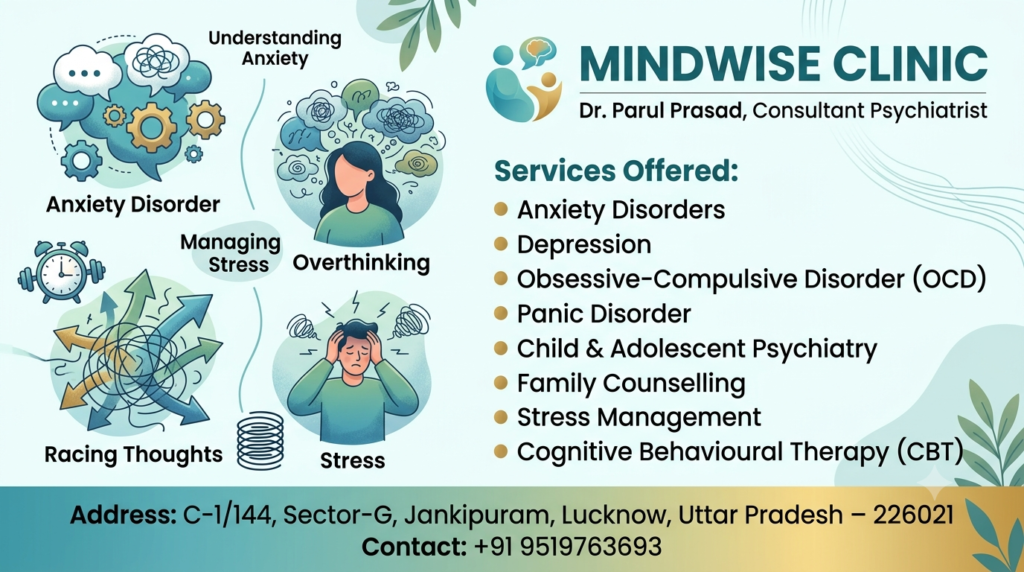
Dr. Parul Prasad Consultant Psychiatrist Services Offered:- Anxiety Disorders
- Depression
- Obsessive-Compulsive Disorder (OCD)
- Panic Disorder
- Child & Adolescent Psychiatry
- Family Counselling
- Stress Management
- Cognitive Behavioural Therapy (CBT)
Suggested External References
- World Health Organization (WHO)
- American Psychiatric Association (APA)
- National Institute of Mental Health (NIMH)
- National Institute for Health and Care Excellence (NICE)
A note on this article: This content is for general educational purposes and is not a substitute for professional medical advice, diagnosis, or treatment. If you are experiencing a mental health crisis or need urgent help, please contact a local emergency service or a crisis helpline directly — such as India's KIRAN mental health helpline: 1800-599-0019 (toll-free, 24/7).
