
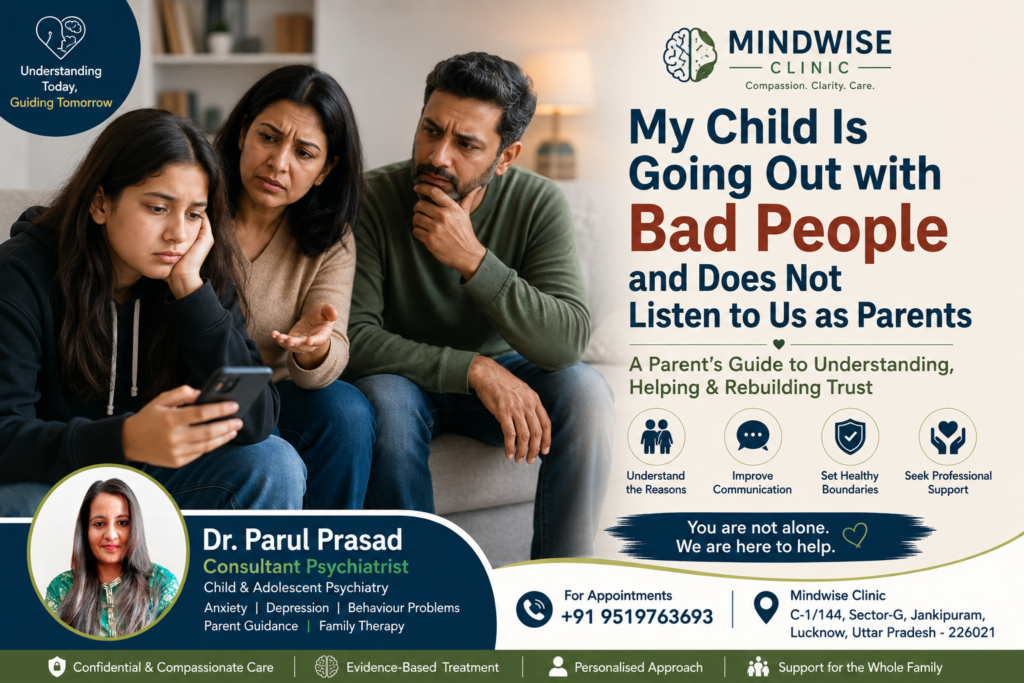
My Child Is Going Out with Bad People and Does Not Listen to Us as Parents
Watching your child slowly drift away from family values can be one of the most painful experiences for any parent. Many parents come to us saying, “Doctor, our child has changed completely. They are going out with people we don’t trust. They lie to us, stay out late, ignore our advice, and become angry whenever we try to help.” As parents, it is natural to worry that your child is being influenced by the wrong group of friends. However, reacting with anger, punishment, or constant criticism often makes the situation worse. At Mindwise Clinic, Dr. Parul Prasad, Consultant Psychiatrist, helps parents understand the emotional, psychological, and social reasons behind these behavioral changes and guides families toward healthier relationships.Why Teenagers Are Strongly Influenced by Friends
Adolescence is a period when children naturally seek independence. During this stage, friends often become more influential than parents. This does not automatically mean your child is becoming a bad person. Instead, teenagers are trying to:- Find their identity
- Feel accepted
- Gain confidence
- Become independent
- Fit into social groups
- Explore new experiences
Who Are “Bad Friends”?
Not every friend that parents dislike is a bad influence. Instead of judging appearance or personality, observe their behavior. Warning signs include friends who encourage:- Smoking
- Alcohol use
- Drug abuse
- Stealing
- Violence
- Bullying
- Unsafe driving
- Skipping school
- Lying to parents
- Risky sexual behaviour
- Online scams
- Gambling
- Illegal activities
Signs Your Child May Be Under a Negative Influence
Parents should look for patterns rather than isolated incidents.Behavioral Changes
- Increased lying
- Becoming secretive
- Frequent arguments
- Loss of interest in studies
- Missing school
- Aggressive behaviour
- Staying out late
- Breaking household rules
Emotional Changes
- Irritability
- Mood swings
- Sudden anger
- Emotional withdrawal
- Anxiety
- Depression
- Lack of motivation
Academic Changes
- Falling grades
- School complaints
- Lack of concentration
- Truancy
Social Changes
- Avoiding old friends
- Hiding new friendships
- Blocking parents from social media
- Refusing family outings
Why Does a Child Ignore Their Parents?
Many parents believe, “Our child doesn’t respect us anymore.” In reality, several psychological factors may be responsible.1. Need for Independence
Teenagers naturally want more control over their lives. Every instruction may feel like criticism.2. Emotional Validation from Friends
Friends often provide immediate acceptance. Teenagers may feel understood by peers more than by parents.3. Low Self-Esteem
Children with poor confidence may do anything to gain approval from friends. They may imitate risky behaviour simply to avoid rejection.4. Family Conflict
Constant criticism, shouting, comparisons, or punishment can push children away emotionally.5. Social Media Influence
Many teenagers copy influencers, online personalities, or viral trends without understanding the consequences.6. Mental Health Problems
Sometimes behavioural changes are symptoms of:- Depression
- Anxiety disorders
- ADHD
- Conduct Disorder
- Oppositional Defiant Disorder (ODD)
- Substance use disorder
- Bipolar disorder
- Trauma-related disorders
Common Mistakes Parents Make
When parents panic, they often unintentionally worsen the situation. Avoid:- Constant lectures
- Threats
- Public humiliation
- Comparing siblings
- Reading private messages without discussion
- Physical punishment
- Calling your child “bad”
- Banning every friend immediately
What Parents Should Do Instead
Stay Calm
Children are more likely to listen when parents remain emotionally regulated.Listen Before Judging
Ask open-ended questions. Examples:- “Tell me about your friends.”
- “What do you enjoy doing together?”
- “How do they make you feel?”
Know Their Friends
Invite friends home. Meet their parents. Observe interactions without being overly controlling.Set Clear Boundaries
Children need structure. Discuss:- Curfew
- Phone usage
- School responsibilities
- Study hours
- Safety rules
Strengthen Your Relationship
Spend quality time together. Examples:- Family dinners
- Sports
- Movies
- Walks
- Cooking together
- Weekend outings
Praise Good Decisions
Notice positive behaviour. Instead of only correcting mistakes, appreciate:- Honesty
- Responsibility
- Academic effort
- Kindness
- Respect
How to Talk Without Starting an Argument
Instead of saying: ❌ “Your friends are useless.” Try: ✅ “We’re worried because we care about your safety.” Instead of: ❌ “You never listen.” Say: ✅ “Help us understand what’s happening.” Instead of: ❌ “You’re becoming a bad child.” Say: ✅ “We’ve noticed some changes, and we’d like to support you.” Language matters.When Should Parents Be Concerned Immediately?
Seek professional help urgently if your child:- Uses drugs
- Drinks excessively
- Runs away from home
- Becomes violent
- Self-harms
- Talks about suicide
- Gets involved with police
- Is repeatedly suspended from school
- Associates with criminal groups
How a Psychiatrist Can Help
Many parents worry that seeing a psychiatrist means something is seriously wrong. In reality, early assessment often prevents bigger problems. At Mindwise Clinic, we help by:Comprehensive Assessment
Understanding emotional, behavioral, academic, and family concerns.Psychological Evaluation
Identifying underlying mental health conditions if present.Parent Guidance
Teaching evidence-based parenting strategies.Individual Therapy
Helping teenagers develop:- Better decision-making
- Emotional regulation
- Healthy friendships
- Confidence
- Problem-solving skills
Family Therapy
Improving communication between parents and children.Medication
Only when clinically indicated for diagnosed mental health conditions.Building Resilience Against Negative Peer Pressure
Parents can reduce the risk of harmful friendships by encouraging:- Strong self-esteem
- Sports
- Music
- Reading
- Volunteering
- Creative hobbies
- Leadership opportunities
- Open communication
- Emotional intelligence
- Healthy family relationships
Frequently Asked Questions (FAQs)
Can bad friends completely change my child’s personality?
Friends can strongly influence behaviour, but with timely support, guidance, and healthy family relationships, positive changes are possible.Should I stop my child from meeting certain friends?
Rather than immediate bans, understand the friendship first. If the relationship is clearly harmful or dangerous, establish firm boundaries while maintaining open communication.Why does my child listen to friends more than parents?
During adolescence, peer acceptance becomes developmentally important. This is a normal stage, although guidance remains essential.Can therapy help teenagers who refuse to listen?
Yes. Therapy often helps teenagers express emotions safely while improving communication and reducing family conflict.Should I check my child’s phone?
This depends on age and safety concerns. If there is a serious risk of self-harm, abuse, or criminal activity, parental monitoring may be necessary. Whenever possible, maintain transparency rather than secret surveillance.Final Thoughts
Every parent wants to protect their child from harm. When your child begins spending time with people who encourage unhealthy choices, fear and frustration are understandable. However, harsh discipline alone rarely changes behaviour. Patience, consistent boundaries, open communication, and professional guidance can help rebuild trust and support healthier decision-making. At Mindwise Clinic, Dr. Parul Prasad works closely with children, adolescents, and families to understand the root causes of behavioural changes and create practical, compassionate treatment plans. Early intervention can strengthen family relationships, improve emotional well-being, and help young people make safer, healthier choices.About Mindwise Clinic
Dr. Parul Prasad Consultant Psychiatrist Mindwise Clinic We provide evidence-based assessment and treatment for:- Child & Adolescent Psychiatry
- Anxiety Disorders
- Depression
- ADHD
- Autism Spectrum Disorder
- Behavioural Problems
- School Refusal
- Emotional Difficulties
- Parent Guidance
- Family Therapy
- Stress Management
The Mindwise Clinic (led by Dr. Parul Prasad) is located in Lucknow, Uttar Pradesh.
Clinic Details
- Address: C-1/144, Sector-G, Jankipuram, Lucknow, Uttar Pradesh – 226021
- Contact Number: +91 9519763693
Suggested External References
- American Academy of Child and Adolescent Psychiatry (AACAP)
- World Health Organization (WHO)
- American Psychological Association (APA)
Disclaimer: This article is intended for educational purposes only and should not replace a professional psychiatric evaluation. If your child is engaging in high-risk behaviour, substance use, self-harm, or expresses suicidal thoughts, seek immediate professional help. Early intervention can make a significant difference in long-term emotional and behavioural outcomes.
A note on this article: This content is for general educational purposes and is not a substitute for professional medical advice, diagnosis, or treatment. If you are experiencing a mental health crisis or need urgent help, please contact a local emergency service or a crisis helpline directly — such as India's KIRAN mental health helpline: 1800-599-0019 (toll-free, 24/7).
