
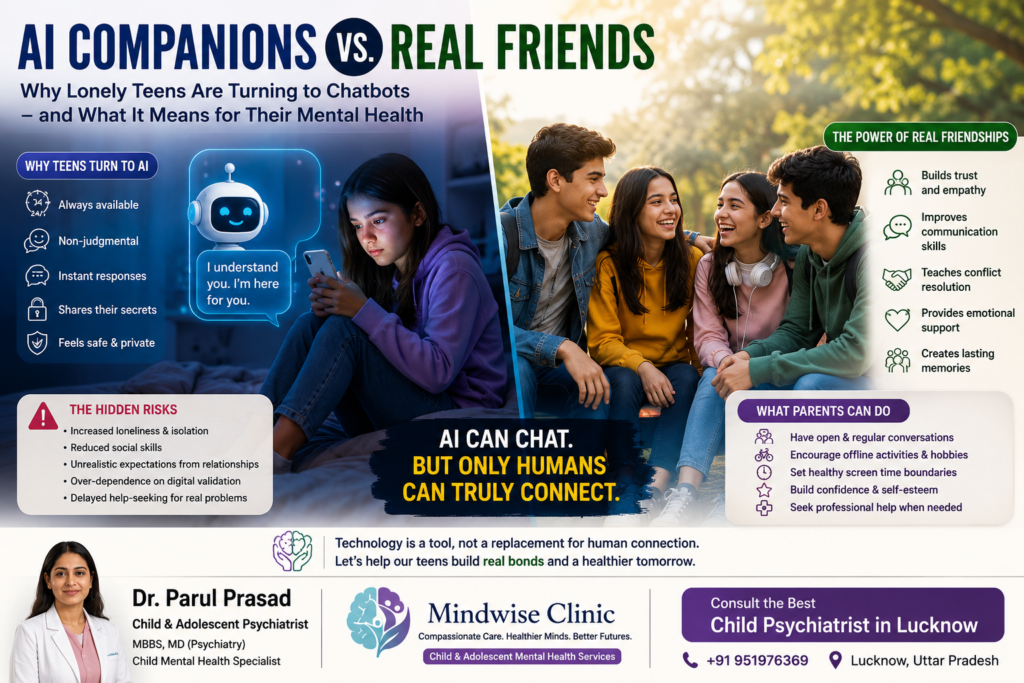
Why Are Teens Becoming Emotionally Attached to AI?
Teenagers often experience stress from academics, social media, family conflicts, or loneliness. AI chatbots are available 24/7, never judge, and respond instantly. This makes them attractive to young people who may feel misunderstood or isolated. Common reasons include:- Feeling lonely or socially isolated
- Fear of being judged by peers
- Difficulty making friends
- Anxiety or low self-esteem
- Curiosity about AI conversations
- Seeking emotional support at any time
Can AI Replace Real Friendships?
The simple answer is No. Real friendships teach children and teenagers important life skills, such as:- Empathy
- Communication
- Conflict resolution
- Trust
- Emotional resilience
- Teamwork
The Psychological Impact of Replacing Human Interaction
Excessive emotional dependence on AI companions may lead to:- Increased social withdrawal
- Reduced confidence in real-life conversations
- Difficulty handling rejection or disagreements
- Unrealistic expectations from relationships
- Increased loneliness despite frequent AI interaction
- Greater screen dependency
Warning Signs Parents Should Watch For
Parents should pay attention if their teenager:- Prefers chatting with AI over spending time with family or friends
- Avoids school or social activities
- Becomes emotionally distressed when unable to access AI apps
- Spends several hours daily talking to chatbots
- Stops participating in hobbies or outdoor activities
- Appears increasingly withdrawn or isolated
How Parents Can Help
Healthy technology habits begin at home. Parents can:- Encourage face-to-face conversations every day.
- Plan family activities without screens.
- Support participation in sports, music, or hobbies.
- Listen without criticism when children share their feelings.
- Teach balanced and responsible use of AI tools.
- Seek professional guidance if social withdrawal persists.
When Should You Consult a Child Psychiatrist?
Consider consulting a mental health professional if your teenager:- Has persistent loneliness or sadness.
- Avoids friends and family.
- Shows signs of anxiety or depression.
- Becomes dependent on AI for emotional comfort.
- Experiences declining academic or social performance.
- Talks about feeling hopeless or disconnected.
Why Choose Dr. Parul Prasad at Mindwise Clinic, Lucknow?
Dr. Parul Prasad provides compassionate, evidence-based care for children and adolescents facing emotional, behavioural, and social challenges. At Mindwise Clinic, every child receives an individualised assessment and personalised treatment plan. Services include:- Child and Adolescent Psychiatry
- Anxiety and Depression Treatment
- Behavioural Problems
- Social Skills Training
- Parenting Guidance
- Emotional Well-being Counselling
- School-related Mental Health Support
Conclusion
AI companions can be helpful tools for learning, productivity, and even temporary emotional support. However, they should never replace the warmth, trust, and personal growth that come from real friendships and family relationships. If your child is becoming increasingly isolated or emotionally dependent on AI conversations, seeking professional support early can make a meaningful difference. At Mindwise Clinic, Lucknow, Dr. Parul Prasad is committed to helping children and teenagers build healthy relationships, emotional resilience, and better mental well-being.Frequently Asked Questions
Is it normal for teenagers to talk to AI chatbots? Yes. Many teenagers use AI for learning or conversation. It becomes a concern only if it replaces real-life relationships or affects daily functioning. Can AI chatbots cause loneliness? AI itself does not cause loneliness, but excessive reliance on AI instead of human interaction may contribute to social isolation. How much screen time is healthy for teenagers? The focus should be on balanced screen use, regular physical activity, adequate sleep, and maintaining meaningful offline relationships. When should parents seek professional help? If a teenager becomes socially withdrawn, emotionally distressed, or increasingly dependent on AI for comfort, a mental health evaluation is recommended.A note on this article: This content is for general educational purposes and is not a substitute for professional medical advice, diagnosis, or treatment. If you are experiencing a mental health crisis or need urgent help, please contact a local emergency service or a crisis helpline directly — such as India's KIRAN mental health helpline: 1800-599-0019 (toll-free, 24/7).
